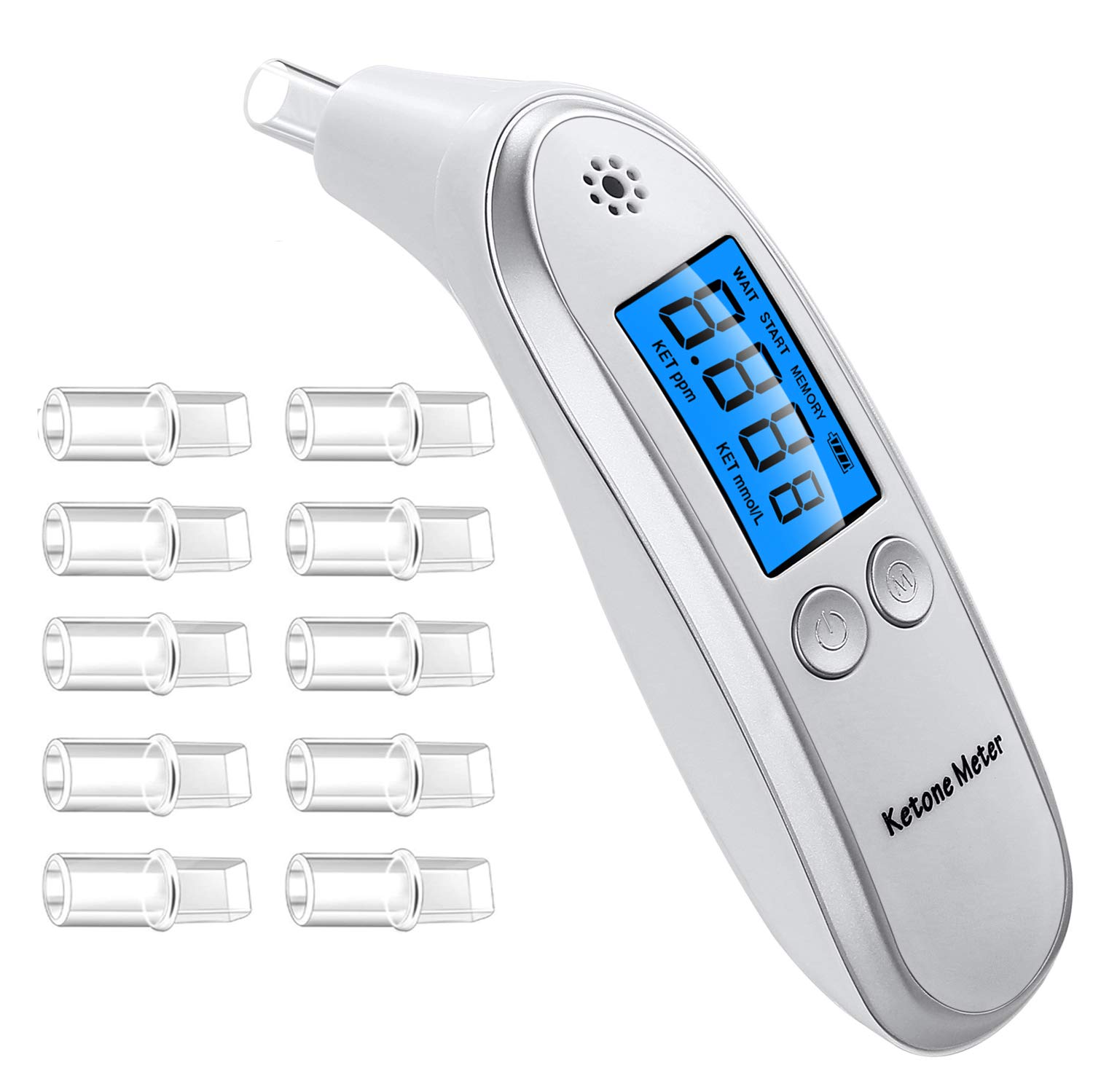
The Ketosis Meter Portable Digital Ketone Breath Tester is an essential tool for anyone serious about their keto journey. Not only does it offer a non-invasive way to measure your ketone levels, but it also significantly simplifies the tracking process compared to traditional methods like finger pricks and urine strips.
Benefits of Using the Ketosis Meter
- Non-Invasive Testing: The ketone breath analyzer eliminates the discomfort of finger pricks, making it a much more appealing option for daily tracking.
- Accurate Tracking: With a high-sensitivity sensor, this device can provide reliable measurements of acetone levels, which correlate directly to your ketone production.
- Ten Mouthpieces Included: The package comes with ten disposable mouthpieces, allowing multiple users without hygiene concerns.
Practical Use of the Device
For optimal results, it’s crucial to follow the usage guidelines carefully:
- Avoid Interference: Do not brush your teeth, smoke, drink, or eat for at least 30 minutes before testing. This will ensure that your results are not skewed by any residual substances.
- Consistent Testing Conditions: Test in the morning while in a fasting state for the most accurate readings. That’s when your body is in a pure state of ketosis.
- Warm-Up Procedure: Allow the device to warm up and exhaust any residuals before your first test. Perform this warm-up step 1-2 times without blowing into the mouthpiece.
- Steady Breathing: Blow steadily into the mouthpiece for 5-6 seconds immediately after the warm-up phase. The results will display automatically after analysis.
Understanding Ketosis Readings
The readings from the Ketosis Meter are classified into six stages of ketosis:
- 0-2 PPM: Not in ketosis / Pre-ketosis – Keep adhering to your keto meal plan.
- 3-4 PPM: Early ketosis – You are progressing well, and fat burning is initiating.
- 5-10 PPM: Light ketosis – Your body is steadily burning fat.
- 11-39 PPM: Optimum ketosis – This is the ideal range where fat is your predominant energy source.
- 40-59 PPM: High ketosis – It’s advisable to adjust your diet or exercise to lower these levels.
- 60-99 PPM: Dangerous ketosis (Ketoacidosis) – Immediate medical attention is necessary.
Insights on Achieving Ketosis
Transitioning your body into ketosis is not an instantaneous process. Expect it to take anywhere from 48 hours to a week, depending on your previous diet and lifestyle choices. Using the Ketosis Meter can help you monitor your progress during this adaptation phase, enabling you to make necessary adjustments along the way.
Tracking breath acetone provides a better measure of your body’s fuel usage, as acetone is a direct byproduct of fat metabolism.